
Color analysis at a glance
Color analysis is easiest to understand as a repeatable shopping filter. It does not decide your style, but it gives you a reliable color range for clothes, makeup, hair, glasses, and jewelry.
| Core method | Fabric draping near the face in neutral light |
| Main dimensions | Temperature, value, and chroma |
| Not decided by | Hair color, eye color, ethnicity, or a quiz result alone |
| Classic seasons | Spring, Summer, Autumn, and Winter |
| Extended systems | 12-season and 16-season palettes |
| Common use | Clothing, makeup, hair color, glasses, and jewelry |
| Typical in-person range | USD $150 to $400+ depending on market and package |
| Best deliverable | A swatch fan or palette with clear shopping rules |
What color analysis means
Color analysis compares fabric colors near your face to identify which ones make your skin look clearer, your eyes brighter, and your features more defined. The output is a seasonal palette, not a personality label.
A good result answers practical questions. It should tell you whether cream or pure white is better, whether black is reliable or harsh, whether gold or silver looks cleaner, and which versions of red, blue, green, pink, brown, and gray are easiest to repeat.
The modern consumer version became mainstream through four-season color analysis. Color Me Beautiful still organizes its guidance around Spring, Summer, Autumn, and Winter, the four labels most people recognize first.
Where the four seasons came from
Seasonal color analysis has roots in twentieth-century color theory and image consulting. It is not a new social media invention, even though TikTok and AI tools have made it visible again.
Johannes Itten, a Swiss artist and Bauhaus teacher, connected personal coloring with seasonal color language in his color theory work. Later consultants turned those ideas into client-facing systems for clothing, makeup, and wardrobe planning.
Carole Jackson brought the framework into mainstream retail culture with Color Me Beautiful in 1980. Color Me Beautiful's own history describes the book as a global phenomenon that sold millions of copies and popularized the four seasons for everyday shoppers.
This history matters because color analysis has no single universal licensing body. Training, lighting, drape quality, and deliverables vary by analyst. A recognizable method is useful, but a clear process matters more than a famous label.
The three dimensions analysts use to place a season
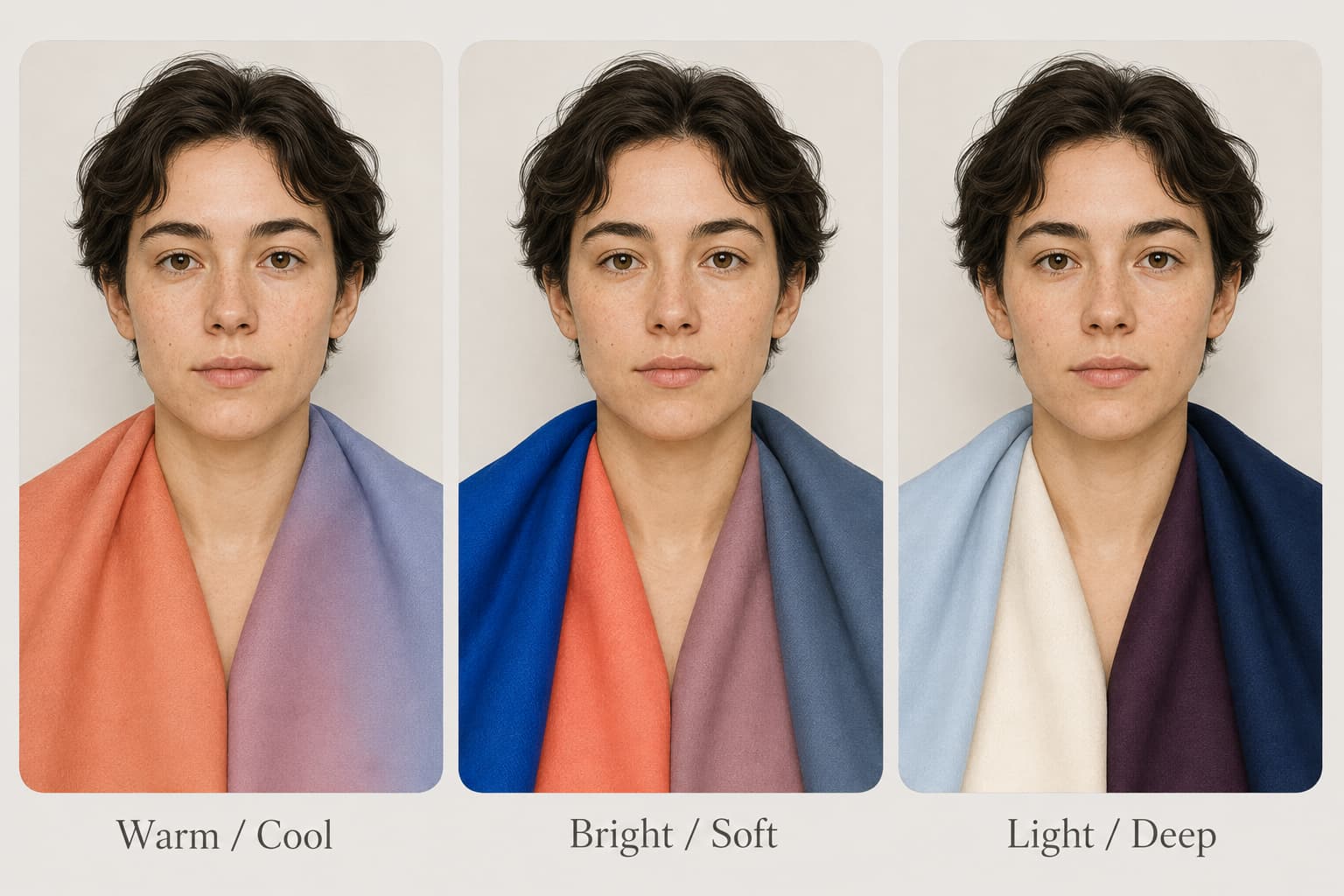
Most seasonal color analysis methods compare temperature, value, and chroma together. Undertone matters, but no one dimension decides a result on its own.
Munsell color notation describes color through hue, value, and chroma. Seasonal color analysis adapts similar language for personal coloring, then adds the warm-cool temperature question that clients notice in clothing and makeup.
Seasonal analysis is a styling framework, not a medical or scientific diagnostic test. Results can vary with the analyst's training, drape set, lighting, and the system they use. The useful question is whether the comparisons give you clear, repeatable shopping guidance.
Temperature asks whether your best colors lean warm or cool. Warm colors lean yellow, peach, golden, olive, or orange. Cool colors lean blue, rose, berry, silver, or violet.
Value asks whether your best colors are light, medium, or deep. A light palette is usually flattened by heavy dark colors. A deep palette often needs richer color or stronger contrast to look awake.
Chroma asks whether your best colors are soft or clear. Soft palettes need muted color with grayness, brownness, or gentler intensity. Clear palettes need cleaner, more saturated color.
The four-season framework
The four-season framework groups palettes into Spring, Summer, Autumn, and Winter. It is broad, but it gives the basic map before 12-season and 16-season systems add more precision.
| Season | Temperature | Value | Chroma | Common colors |
|---|---|---|---|---|
| Spring | Warm | Light to medium | Clear | Ivory, peach, coral, warm yellow, fresh green, aqua |
| Summer | Cool | Light to medium | Soft | Soft white, rose, mauve, lavender, powder blue, blue-gray |
| Autumn | Warm | Medium to deep | Soft to rich | Cream, camel, olive, rust, terracotta, chocolate |
| Winter | Cool | Medium to deep | Clear | Pure white, black, cobalt, fuchsia, emerald, blue-red |
A four-season result is enough for orientation. A seasonal color analysis guide or a trained analyst can narrow the result when you sit between two families.
What professional draping tests
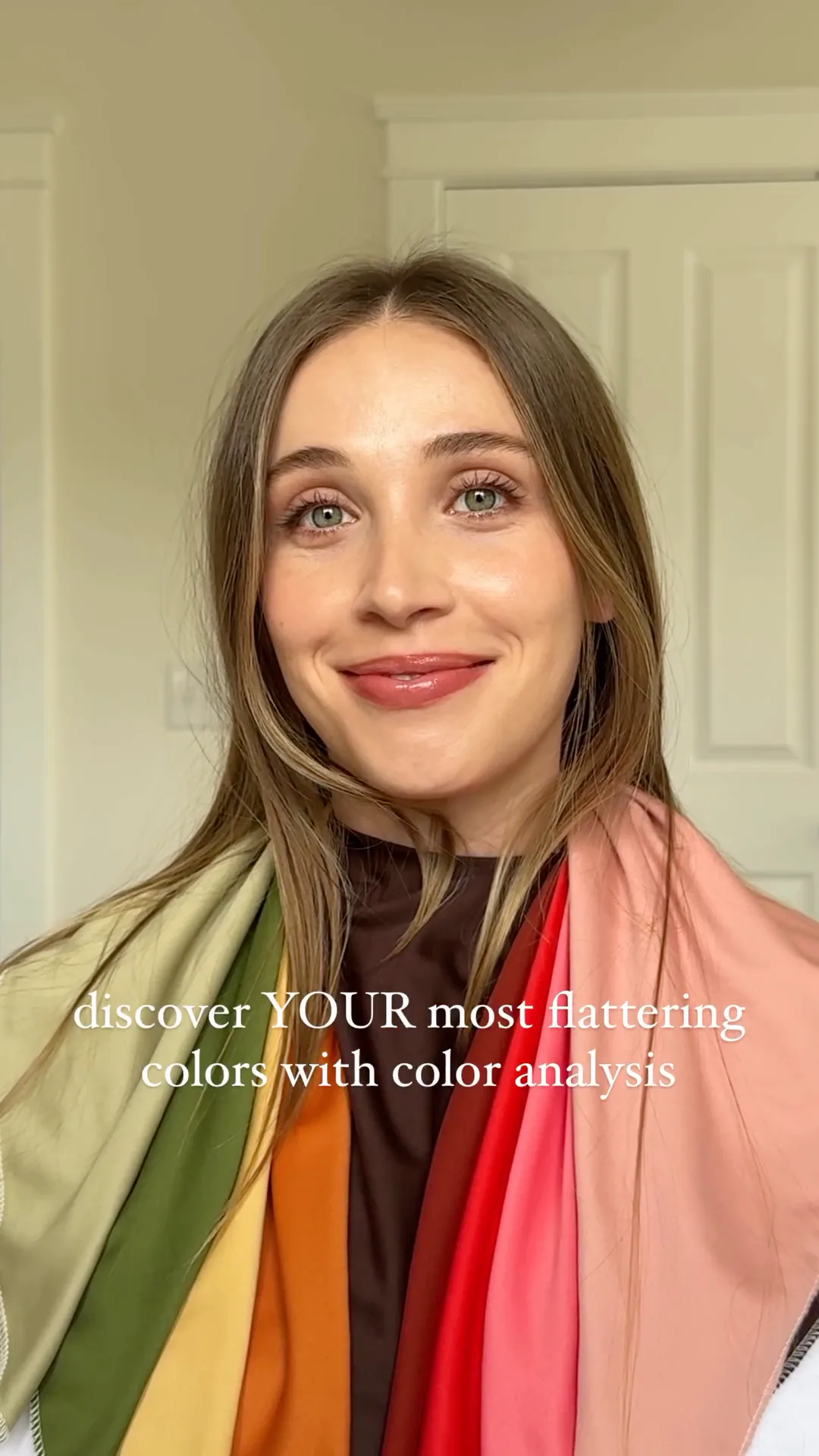
Professional draping lets an analyst compare real fabric near your face in controlled light. It is a better-controlled comparison than a quiz, but it is not a standardized scientific test with one universal result.
Set up neutral light
Sit in natural or daylight-balanced light, remove colored makeup, and cover clothing near the neck with a neutral drape.
Test warm against cool
Compare yellow-based fabrics with blue-based fabrics near the jaw to see which side makes the skin look clearer.
Test light against deep
Compare pale, medium, and deep fabrics to identify the value range that keeps the face balanced.
Test soft against clear
Compare muted fabrics with saturated fabrics to see whether the face needs softness or sharper color.
Confirm the palette
Place candidate season swatches together and check whether the improvement is consistent across the full palette.
House of Colour describes its color analysis as an in-person service built around draping and seasonal results. Independent analysts may use different systems, so ask how they control the light and compare candidate palettes.
A useful draping process does not need to start from hair color, eye color, or a quiz label. Created Colorful notes that thin photo and quiz processes can fall back on stereotypes, while a careful analysis examines how the face responds when colors are tested nearby. Its comparison of color analysis options explains why photos and self-reported undertones offer less controlled evidence than a live drape comparison.
What useful drape evidence looks like
A useful comparison records an observable change in the face. It does not claim that one color makes someone objectively better-looking.
Under-eye shadows
Compare two drapes in the same light. Note whether one makes under-eye shadows look stronger or less noticeable.
Skin evenness
Look for whether redness, sallowness, or uneven tone becomes more obvious beside one color.
Feature definition
Check whether the eyes, lips, and jaw remain distinct, or whether the fabric takes visual attention away from the face.
The tests that sound scientific but are not
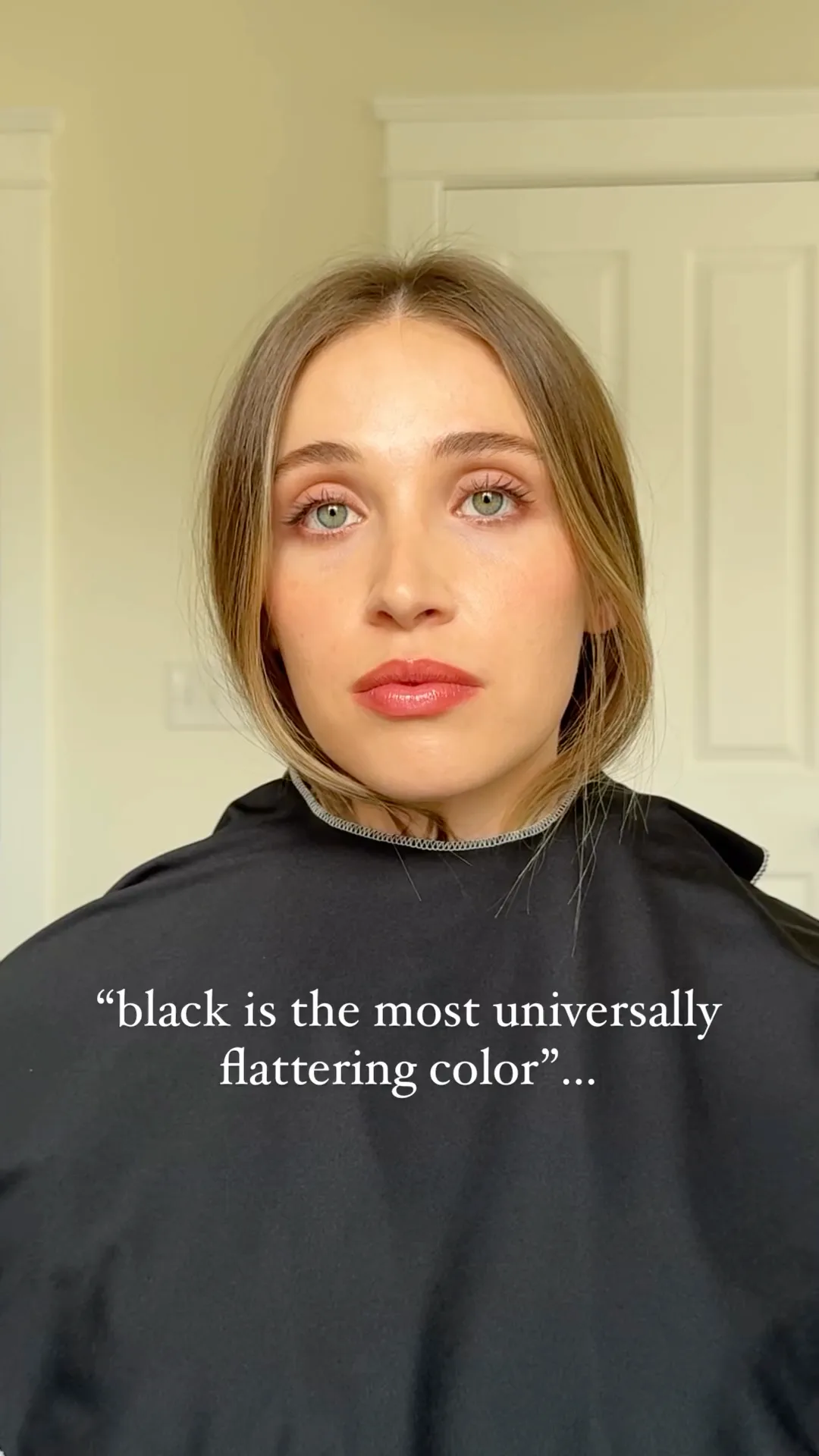
Popular DIY tests can give clues, but they are not substitutes for draping. They usually test one isolated signal instead of the full effect of color on the face.
The vein test
Blue or green veins do not prove a season. Vein appearance changes with skin depth, lighting, hydration, and how much tissue sits over the vein.
The jewelry test
Gold and silver preference is useful context, but it is not a diagnosis. Outfit color, makeup, finish, and personal taste can all change the result.
The freckles rule
Freckles can point warm, but they do not decide the palette. Red hair, freckles, brown eyes, and gray hair all appear across more than one season.
Hair and eye shortcuts
Dark hair does not automatically mean Winter or Autumn. Light eyes do not automatically mean Spring or Summer. They are contrast clues, not final evidence.
Ethnicity shortcuts
Skin depth is not the same as undertone. Any shortcut that assigns a season from ethnicity or surface depth alone is weaker than draping.
Surface depth is not the same as undertone. SELF notes that dark complexions can have cool undertones and fair complexions can have warm undertones, which is why skin depth alone cannot decide a season.
How 12-season and 16-season systems fit
The 12-season system adds precision by splitting each parent season into three sub-seasons. Spring becomes Light Spring, Warm Spring, and Bright Spring. Summer, Autumn, and Winter split the same way.
The 16-season system adds more categories, but there is not one universal 16-season standard. Some systems separate pure parent seasons. Others add extra in-between results for people whose coloring sits between two palettes.
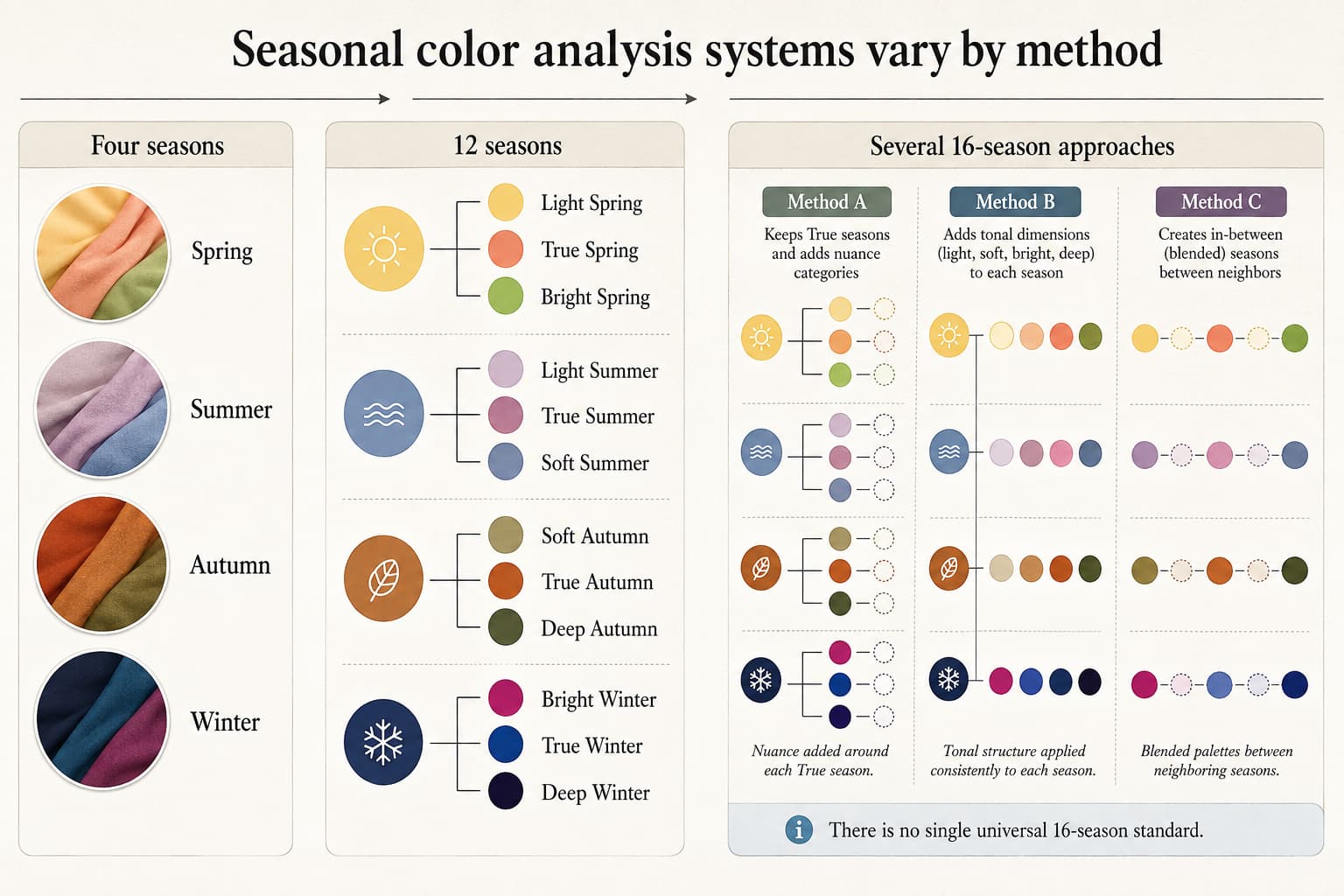
Most first-time clients should not choose by category count alone. A careful 12-season analyst is usually more useful than a vague 16-season result. The 12 vs 16 season comparison explains when the extra nuance is worth seeking.
What a reliable result should include
A reliable color analysis result gives you more than a season name. The value is in the buying rules you can use after the appointment.
- A season name and subsystem name, if a 12-season or 16-season method was used
- A physical swatch fan, palette card, or digital palette that shows actual usable colors
- Best neutrals, including white, black, navy, gray, camel, brown, and denim direction
- Metal guidance, including gold, silver, rose gold, brightness, and finish
- Makeup guidance for lipstick, blush, bronzer, eye color, and hair color direction
- A short avoid list that explains which colors create shadows, dullness, or harshness
A weak result leaves you with a label and no filter for real purchases. A strong result helps you choose between two sweaters, buy lipstick faster, stop buying the wrong white shirts, and understand why some colors look almost right but still feel off.
Before booking, ask what the analyst provides at the end of the session. The questions to ask before booking guide covers training, lighting, drapes, pricing, and follow-up.
What color analysis costs in 2026
Color analysis cost depends on format, market, training, and deliverables. Free tools are useful for curiosity, while in-person draping is the better choice when the result will guide real spending.
| Method | Typical cost | What you get | Best for | Main limit |
|---|---|---|---|---|
| Free quiz or AI app | USD $0 to $20 | Season guess, broad palette, sometimes a digital report | Curiosity before booking | Lighting and photo processing can distort value and chroma |
| Online analyst | USD $50 to $150+ | Photo review, written notes, digital palette, sometimes a video call | Remote clients and lower budgets | No controlled fabric draping on the face |
| In-person draping | USD $150 to $400+ | Drape comparison, season result, practical guidance, often a swatch fan | A result that guides real spending | Local availability and appointment lead times |
| Premium styling package | USD $400 to $800+ | Analysis plus wardrobe audit, shopping help, makeup, or style services | A larger wardrobe rebuild | Often more than a first-timer needs |
Public pricing varies by city. Axios reported Charlotte color analysis sessions at USD $300 to $400 in 2024, which fits the upper end of many current in-person ranges. For a fuller price breakdown, read Color Analysis Cost.
How accuracy changes by method
Photo-based tools can be useful for a broad starting hypothesis. They are less controlled than live draping, especially at fine season boundaries.
Camera exposure, filters, screen brightness, and photo compression can change apparent temperature, value, and chroma. A muted palette can look clearer on one screen, while a clear palette can look flatter on another.
An app result is not a diagnosis. Treat it as a starting point, then compare fabrics in neutral light before making expensive wardrobe, hair, or makeup decisions.
Use AI or online analysis to form a hypothesis. Use a live appointment when you want an analyst to guide the comparisons in real time. The online vs in-person comparison explains the tradeoff in more detail.
When it makes sense to wait before booking
Book for the version of your appearance you want the guidance to support. Your natural coloring is generally stable, but your current hair and styling choices can change which palette advice feels most practical.
Consider waiting during a major hair transition, including bleaching, growing out dye, or moving to gray, if you want a palette for your settled appearance. Otherwise, ask the analyst to explain how they will account for your current hair.
Temporary tanning, illness, or postpartum changes do not automatically rule out an appointment. Ask whether the analyst types natural coloring or current as-worn coloring, then decide which guidance you need.
Wait if you are only curious and the appointment cost feels high. Start with a free quiz, compare a few drapes at home, or book a lower-cost online analysis before spending on a full in-person session.
Clarify the goal if you always wear hair color that differs strongly from your natural color. Some analysts type natural coloring. Others type your current as-worn appearance. Ask before booking.
Can you do color analysis at home?
You can test color analysis at home if you keep the setup strict. The result is a working hypothesis, not the same thing as a professional draping session.
- Sit beside a window in indirect daylight, not direct sun or warm evening light.
- Remove makeup and cover colored clothing with a white or gray towel.
- Pull dyed hair back if it is very different from your natural color.
- Hold solid-color fabric near your jaw, not against your hand.
- Photograph comparisons with the same camera settings, then review them side by side.
Watch the face, not the fabric. The better color should soften jaw shadows, reduce under-eye darkness, make the eyes look clearer, and make the skin look more even.
Home testing is useful for learning the language. It is weaker when your coloring is neutral, olive, very high contrast, very low contrast, or affected by dyed hair. In those cases, a professional appointment is usually faster than months of second-guessing.
Next step
Where to find a qualified analyst
A qualified analyst should be able to explain their training, lighting, drape process, pricing, and final deliverables. Start with the color analyst directory, then compare local options by method, format, reviews, price, and whether a palette is included.